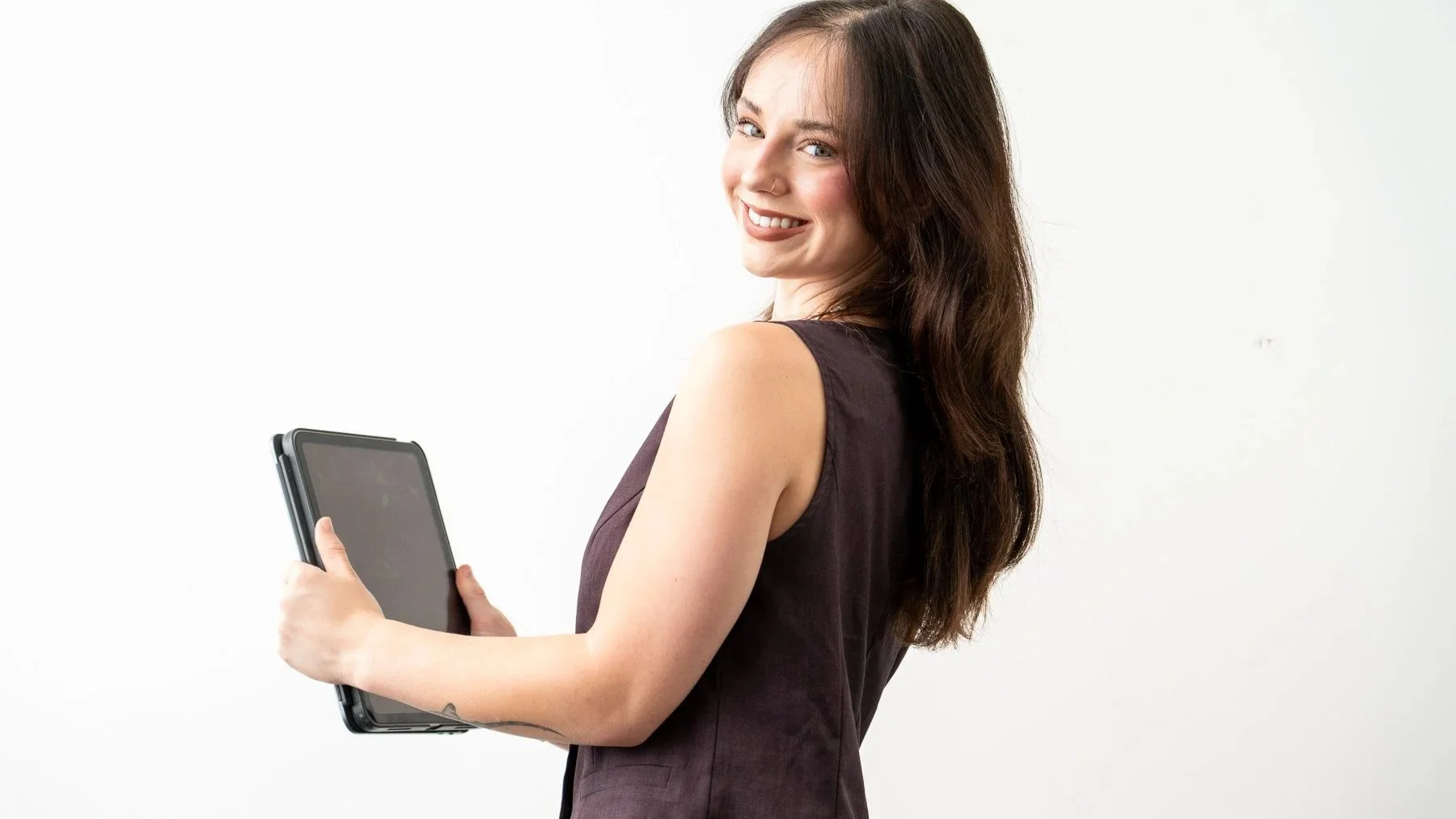
Branding photography is a real investment in time, in planning, and in money. And like any investment, the return depends heavily on timing.
Book too early before the infrastructure is in place to use what you create and you end up with a beautiful gallery of images sitting in a folder, doing nothing. Book at the right moment, when you're positioned to deploy them strategically, and the same investment pays for itself many times over.
Here's how to honestly assess where you are.
Signal #1: You Know Who You're Talking To
You don't need a perfectly articulated niche carved in stone. But you do need a genuine sense of the kind of person or organization you do your best work with.
Branding photography tells a story and that story needs an audience. The locations we choose, the expressions we capture, the contexts we put you in, the overall aesthetic of the gallery all of it is communicating something to a specific someone. If you're completely uncertain who that someone is, the session produces images that are technically strong but strategically directionless.
You don't need to have your audience defined with a demographics spreadsheet. You need to be able to answer this question with some confidence: "When I imagine my ideal client seeing these images, who am I picturing?" If you have a clear picture, you're ready. If you don't, spend time on that before spending money on photography.
Signal #2: You Have Somewhere for the Images to Live
A branding gallery doesn't generate results sitting in a Google Drive folder. The images need to be deployed on a website that's live and actively driving traffic, on social platforms where you're consistently publishing, in a speaker kit you're actively submitting, in marketing materials that are reaching your target audience.
The most common timing mistake: booking a branding session in anticipation of a website that's six months from launching. The images are ready. The website isn't. The gallery sits idle. Meanwhile, the images are aging and branding photography has a shelf life.
Ideally, you have at least one active deployment channel ready to use the images within 30 to 60 days of the session. That might be a website, a LinkedIn content calendar, a new speaker kit, or a marketing campaign. The specifics matter less than having a concrete plan.
Signal #3: You're Investing in Infrastructure, Not a Quick Fix
If you're in a cash-flow crisis and hoping a branding session will generate immediate leads, this probably isn't the right moment. Branding photography builds visual infrastructure the foundation that makes your marketing more effective over time. It doesn't generate leads directly. It makes lead generation work better.
The ROI is real, but it's cumulative. A polished website that converts at a higher rate because the images build instant credibility. A LinkedIn presence that generates more inbound because the profile looks the part. A speaker submission that gets accepted because the materials communicate professionalism. These effects compound over months and years; they don't show up on a revenue report the week after the session.
If you understand that and you're in a stable enough position to invest in long-term infrastructure, you're ready.

Signal #4: You're Prepared to Show Up
This one is less strategic and more personal but it matters just as much.
A branding session requires genuine presence. Not just physical presence mental and emotional presence. You need to show up having done the prep work: wardrobe selected and ready, locations confirmed, a rough shot list developed, some thought given to what story you want these images to tell.
Clients who come in distracted, exhausted, or emotionally checked out going through the motions because they scheduled this three months ago and it's on the calendar produce images that reflect exactly that. The camera captures everything.
Readiness isn't about being perfectly confident or having everything figured out. It's about being genuinely engaged with the purpose of the session. If you can answer "why do these images matter right now?" with something specific and real, you're ready to show up.
Signal #5: Your Current Visual Presence Has a Clear Gap
Sometimes the clearest indicator of readiness is simply an honest look at where you are versus where you need to be.
Walk through your own website right now. Click through your LinkedIn profile. Look at your speaker kit or media page. Ask yourself: does this visual presence communicate the level I'm operating at? Does it reflect who I am today not who I was two or three years ago? Would my ideal client look at these images and immediately feel confident that I'm the right fit?
If the honest answer is no if there's a visible gap between the quality of what you deliver and the quality of how you're presenting yourself visually that gap is costing you clients you'll never know you lost. Closing it is the work.
Not Sure Yet? The Discovery Call Is the Right First Step
If you're sitting with two or three of these signals but not all five, that's a normal place to be. The discovery call at Capture Style isn't a sales pitch it's the conversation where we honestly assess whether the timing is right, what would need to be true for it to make sense, and what the session would actually look like for your specific situation.
Capture Style Photography serves professionals, entrepreneurs, speakers, and executives throughout Cleveland and Northeast Ohio. Contact Howard directly to start the conversation.
(216) 264-0654 |info@capturestyle.photos | tidycal.com/capturestylephoto
About the Author
Howard Myles is the founder and lead photographer at Capture Style Photography, a professional headshot and branding photography studio based in Lakewood, Ohio. He specializes in individual headshots, corporate team photography, and personal brand sessions for entrepreneurs, executives, and professionals throughout Northeast Ohio. Howard has photographed hundreds of professionals across Cleveland, helping them build visual identities that match the level at which they actually operate.